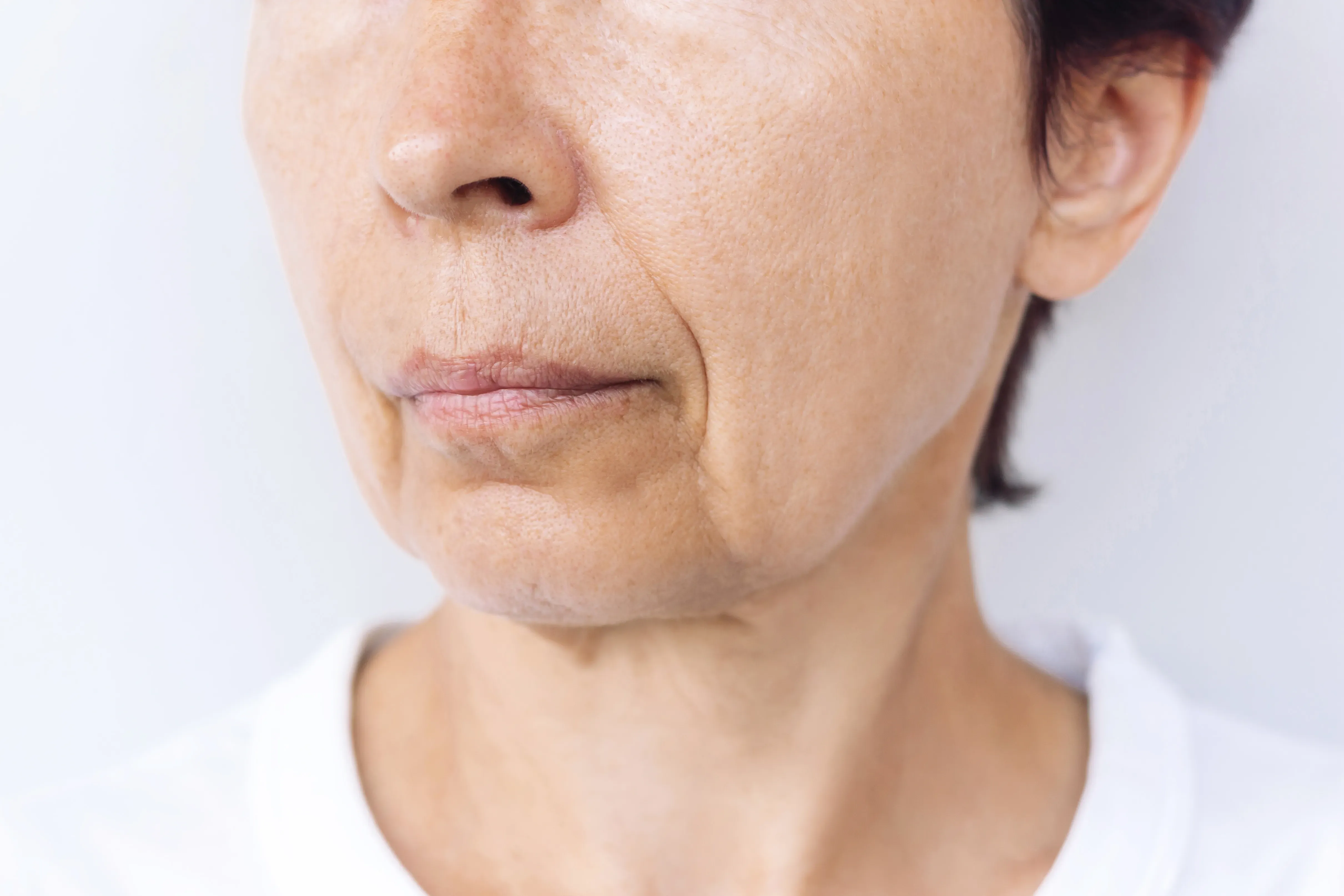

Sagging Jowls: Why the Jawline Changes and What Actually Helps
Author: Nulook ExpertiseReview by: NuLook Aesthetic DoctorsSagging jowls can make the lower face appear heavier, less defined, and older than the rest of the features. They develop when the skin and deeper facial tissues no longer hold the same position along the jawline. Although aging is the most common reason, genetics, facial structure, weight changes, and daily habits can also affect when jowls become visible.
The right approach depends on how much sagging is present and what is causing it. Skincare may help protect mild laxity, while established jowls often require treatment that addresses lost support, muscle pull, or descended tissue. The articles below explain the causes and the practical options available.
Read also: 4 Ways to Tighten Sagging Cheeks
What Are Jowls?
Jowls are areas of loose skin and soft tissue that descend below the jawline, usually between the chin and the ears. They can blur the lower border of the face, deepen the folds beside the mouth, and reduce the separation between the jaw and neck.
The change is not limited to the skin. Facial fat compartments, ligaments, muscles, and bone structure also influence how strongly the lower face is supported. This explains why simply tightening the skin may not correct every case.
Causes of Sagging Jowls
Sagging jowls usually develop through several changes happening at the same time. Identifying the dominant cause helps determine whether the concern requires better skin maintenance, added structural support, muscle treatment, or surgical lifting:
1. Natural Collagen and Elastin Loss
Collagen gives the skin strength, while elastin allows it to return to its original position after movement. Production of both proteins gradually declines with age, causing the skin to become thinner and less resistant to gravity. As this support weakens, tissue around the lower cheeks begins to settle along the jawline.
2. Descending Facial Fat and Supporting Tissue
Facial fat is divided into separate compartments that help maintain youthful contours. Over time, some compartments lose volume while others shift downward, creating hollowness higher on the face and heaviness around the mouth and jaw.
Supporting ligaments also become less effective at holding tissue in place. The combined change can create jowls even when the person has not gained weight.
3. Genetics and Facial Structure
Some people naturally have thinner skin, weaker connective tissue, or a smaller chin that provides less support for the lower face. These inherited features can make sagging jowls noticeable earlier, even when the skin is otherwise healthy.
Facial structure also affects how visible the change becomes. A strong chin and jaw may conceal mild laxity, while limited projection can make the same amount of sagging appear more pronounced.
4. Significant Weight Changes
Substantial weight loss can reduce facial volume and leave the skin with less internal support. Repeated cycles of weight gain and loss may also stretch the tissue, making it harder for the skin to return to its previous position.
5. Sun Exposure, Smoking, and Lifestyle Habits
Repeated UV exposure accelerates collagen breakdown and contributes to premature sagging. Smoking can further affect skin quality by reducing healthy circulation and exposing the tissue to substances associated with early aging. Poor sleep and inadequate nutrition may also make the skin look less resilient, although they are rarely the only cause of jowls.
Read also: Mini Facelift for Jowls: Benefits, Procedure, & Recovery
How Can You Reduce Sagging Jowls?
No single method works for every jawline. The options below range from supportive home care for early changes to procedures that provide stronger correction for established sagging:
1. Practice Posture and Neck Exercises
Chin tucks can improve head position and strengthen muscles that support the neck. Sit upright, draw the chin straight backward without looking down, hold for 5 seconds, and complete 10 repetitions. Perform the routine 3 to 4 times per week and stop if it causes pain.
Gentle neck isometric exercises may also support posture, but they cannot remove loose skin or reposition facial tissue. Exercise should therefore be treated as supportive care, not a replacement for medical treatment.
2. Follow a Consistent Skincare Routine
In the morning, use a gentle cleanser, antioxidant serum, moisturizer, and broad-spectrum sunscreen with SPF 30 or higher. Reapply sunscreen every 2 hours during prolonged outdoor exposure, including along the jawline and neck.
At night, cleanse the skin and apply a low-strength retinol 2 times per week before moisturizer. Frequency can be increased gradually if the skin remains comfortable. Retinoids may support collagen production and improve fine lines, but their tightening effect is subtle and will not eliminate prominent jowls.
3. Dermal Filler
Dermal filler can improve early jowls by adding support to the chin, jawline, or hollow area directly in front of the sagging tissue. Careful placement smooths the break along the mandibular border and creates a more continuous lower-face contour.
Filler does not remove loose skin, so adding too much volume can make a heavy lower face look fuller. It is generally more appropriate for mild jowling, limited chin projection, or age-related volume loss than for advanced sagging.
4. Botulinum Toxin
The platysma muscle extends from the neck into the lower face and can pull downward along the jawline. Botulinum toxin may be placed in selected areas of this muscle to reduce its activity and create a modest improvement in jawline definition.
This method is most relevant when muscle pull or visible neck bands contribute to the concern. It cannot remove excess skin or lift heavy jowls, and the effect is temporary. Clinical trials have reported improved platysma prominence and jawline appearance in appropriately selected patients.
5. Thread Lift
A thread lift uses temporary medical sutures placed beneath the skin to create a subtle mechanical lift. It is usually considered for early jowls and mild tissue descent in people who do not yet need surgical correction.
The procedure involves less recovery than a facelift, but its lifting capacity and longevity are also more limited. Results depend heavily on tissue quality, the direction of the lift, and appropriate patient selection.
6. Tighten Mild Laxity with Thermage
Thermage uses monopolar radiofrequency energy to heat deeper layers of the skin while protecting the surface. This controlled heating encourages collagen remodeling, which may gradually improve mild lower-face laxity.
Changes usually develop over the following months rather than appearing as an immediate lift. Research supports modest improvement in lower-face firmness, but Thermage cannot reposition substantial jowls in the same way surgery can.
7. Reposition Advanced Sagging with Facelift Surgery
Facelift surgery provides the strongest correction when jowls result from moderate or advanced tissue descent. Modern procedures lift and reposition the deeper supporting layers before excess skin is removed, rather than relying on surface tightening alone.
This approach can redefine the jawline, improve sagging cheeks, and create a smoother transition into the neck. Surgery requires a longer recovery than injectable or energy-based treatments, but it offers more substantial and longer-lasting correction for prominent jowls.
Read also: Plastic Surgery Jawline: How to Achieve a Sculpted Profile
A Better Jawline Begins with the Right Level of Correction
Improving sagging jowls is not simply a matter of choosing the strongest treatment. Mild laxity may respond to skincare, Thermage, botulinum toxin, filler, or a thread lift, while tissue that has descended further usually requires surgical repositioning. The most balanced result comes from addressing the cause without adding unnecessary volume or tension.
These professional options are available through Jowls Treatment Bali at Nulook. As a professional Korean Beauty clinic that provides both non-surgical and surgical care, treatment can be selected according to the condition of the skin, facial support, muscle activity, and severity of the jowls rather than being limited to one technique.
Nulook’s approach is supported by individualized treatment planning, modern procedures, strict safety and hygiene standards, and qualified plastic surgeons who have received direct training in Korea. The focus remains on restoring a cleaner jawline while preserving natural proportions and recognizable facial features.
Book an appointment at Nulook to choose a treatment that fits how your face has changed, not a generic definition of the ideal jawline.
References:
- Medical News Today. Accessed in 2026. Jowls: Exercises, causes, treatment, and prevention
- Peter Karlsberg, MD. Accessed in 2026. Can Sagging Jowls Be Prevented?
- Healthline. Accessed in 2026. Jowls: Causes, Treatment, Prevention and More
